
Airbags are designed to be the ultimate passive safety feature, deploying in milliseconds to shield vehicle occupants from violent impact forces. However, what happens when the very device engineered to save your life turns into a lethal explosive? The Takata airbag crisis represents the largest and most complex safety recall in automotive history, spanning tens of millions of vehicles across dozens of global brands.
Years after the initial emergency alerts were issued, millions of vehicles equipped with defective Takata inflators remain on public roads worldwide. Understanding the chemical volatility behind these defective components, the environmental factors that accelerate their degradation, and the lingering public safety risks is essential for every vehicle owner.
The Volatile Chemistry: Phase-Stabilized Ammonium Nitrate
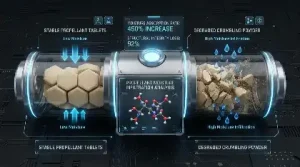
At the core of the Takata defect lies a fundamental chemical miscalculation. To deploy an airbag within 30 to 40 milliseconds, the inflator module relies on a rapid chemical reaction that generates a massive volume of gas. Takata opted to use ammonium nitrate as the propellant compound due to its low cost and rapid burn rate.
Unlike safer alternatives such as guanidine nitrate, non-desiccated ammonium nitrate is highly sensitive to environmental fluctuations. Over time, exposure to high absolute humidity and thermal cycling causes the chemical propellant wafers inside the steel inflator casing to break down physically:
- Propellant Degradation: As moisture infiltrates the sealed inflator housing, the solid ammonium nitrate tablets crumble into a fine, highly volatile powder.
- Surface Area Expansion: When the surface area of the propellant increases, its burn rate accelerates exponentially upon ignition.
- Excessive Pressure Generation: Rather than burning in a controlled manner to inflate the fabric cushion, the degraded propellant detonates violently.
This uncontrolled detonation causes the thick steel inflator canister to rupture under catastrophic internal pressure, effectively transforming the airbag assembly into a fragmentation grenade inside the passenger cabin.
Environmental Accelerators and Risk Zones
The degradation process does not happen overnight. Investigators discovered that the risk of an inflator explosion correlates directly with the age of the vehicle and the environmental conditions in which it operates. Regions characterized by persistent heat and high humidity significantly accelerate the chemical decay of non-desiccated ammonium nitrate.
Safety regulators eventually categorized recall priorities into geographic zones, placing vehicles in coastal regions, tropical climates, and southern states into high-risk tiers. In these zones, vehicles as young as five to six years old exhibited dangerous levels of propellant breakdown.
According to safety databases maintained by the National Highway Traffic Safety Administration, exposure to prolonged heat cycles causes the metal canister casing to weaken right at the moment internal combustion pressures reach their absolute peak, driving sharp metal shrapnel directly through the airbag fabric toward occupants.
The Ongoing Legacy: Why Millions Remain Unrepaired
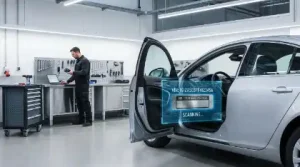 Despite aggressive public outreach campaigns, legal settlements, and mandatory manufacturer outreach, millions of affected vehicles still operate with unreplaced Takata airbag inflators. Several key factors contribute to this lingering hazard:
- Used Vehicle Ownership Transfer: As older vehicles are sold through private markets or secondary used car dealerships, manufacturer safety notifications often fail to reach subsequent owners.
- Consumer Recall Fatigue: Many drivers ignore official recall letters, assuming a minor component replacement is not urgent or fearing out-of-pocket repair costs (despite all safety recall repairs being legally free).
- Supply Chain Delays: Manufacturing tens of millions of redesigned, desiccated replacement inflator modules created multi-year backlogs, leaving older vehicles vulnerable for extended periods.
As these vehicles age further, the danger curve grows steeper. Vehicles manufactured between 2001 and 2014 that have spent their operational lives in humid climates now represent extreme safety hazards, prompting several automotive manufacturers to issue urgent “Do Not Drive” warnings for specific model lines.
Protecting Yourself: How to Verify Vehicle Safety Status
Because safety recalls follow the Vehicle Identification Number (VIN) rather than the owner’s name, verifying your vehicle’s status requires proactive auditing. Every car owner, particularly those purchasing a second-hand vehicle, should perform the following checks:
- Locate Your VIN: Find the 17-character VIN stamped on the driver’s side dashboard corner or inside the driver’s door jamb.
- Query Official Databases: Input your VIN directly into federal safety lookup tools or manufacturer recall portals to check for open safety actions.
- Schedule Free Repairs: If an open recall appears for an airbag inflator or any defective safety system, contact an authorized franchised dealership immediately to book a free repair session.
The Takata airbag disaster remains a stark reminder of how subtle manufacturing oversights and chemical instability can compromise critical safety systems. Checking your vehicle for open recalls is a simple step that eliminates a potentially fatal hidden hazard beneath your steering wheel.